Introduction
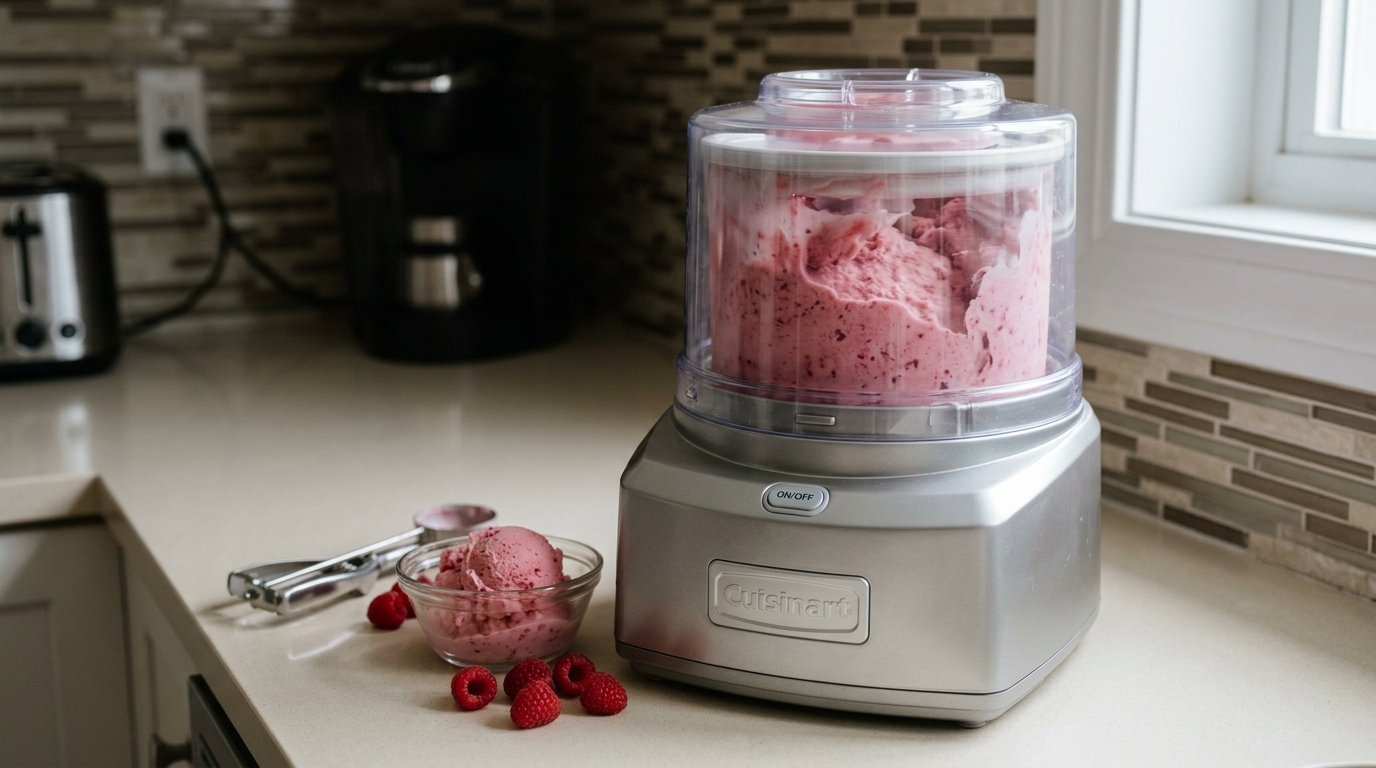
There’s a version of homemade ice cream that involves a hand crank, rock salt, and a good hour of arm-numbing effort — and then there’s the Cuisinart ICE30BCP1, which has nothing to do with any of that. It’s built entirely around a fully automatic setup, with a double-insulated freezer bowl doing the real work, promising finished ice cream, sorbet, or frozen yogurt in under half an hour, as long as you’ve thought ahead enough to freeze the bowl beforehand. This article goes through what this machine actually does, how it fits into making different kinds of frozen desserts, who’s probably going to get real use out of it, and a handful of practical points worth knowing before it takes up permanent freezer real estate.
Same as always with these breakdowns, this isn’t about declaring it the single best ice cream maker around. It’s about laying out exactly what it offers so you can weigh it against how often you’d actually use it.
Key Features
2-quart capacity. Enough for a small family or a casual get-together, sitting in that comfortable middle ground between a single-serving gadget and something meant for big production runs.
Fully automatic churning. No hand-cranking involved — add the ingredients, and the machine handles mixing and freezing entirely on its own.
Double-insulated freezer bowl. That extra layer of insulation is meant to keep the bowl at a more consistent cold temperature all the way through the churning cycle, which generally leads to more even freezing than a single-walled bowl would manage.
Under 30 minutes, assuming proper prep. As long as the bowl’s been sufficiently pre-frozen, this machine is built to turn out a finished dessert well inside that half-hour mark — considerably faster than most traditional home approaches.
Not just ice cream. Sorbet and frozen yogurt are both fair game too, so it’s not locked into a single narrow dessert type.
Simple, no-frills controls. Being fully automatic keeps the interface pretty basic — mostly just start and stop, without a bunch of manual adjustments to fuss over mid-cycle.
Silver finish. Clean and understated, built to sit on a counter without screaming “novelty appliance.”
How It Can Be Used
Classic homemade ice cream is the natural starting point — pour a prepared custard or cream-based mixture into the already-frozen bowl, and the machine churns it into a finished, scoopable texture within that stated window.
Sorbet works through a similar process, just swapping in a fruit-based, dairy-free mixture, relying on that same churning-and-freezing action to produce a smooth, icy dessert without any cream in the mix.
Frozen yogurt follows suit too, generally using a yogurt-based blend that churns into something lighter and tangier than standard ice cream — a solid option if you want a bit of variety in flavor and texture.
Since it’s fully automatic, this tends to draw in people who want the process to stay mostly hands-off once the ingredients are actually ready, rather than standing there cranking a handle the whole time.
The bowl itself generally needs a solid stretch in the freezer ahead of time, so plenty of owners just leave it there semi-permanently, or plan a day or two in advance whenever they know they’re making a batch — more of an “advance prep” situation than something fully spontaneous.
Given its 2-quart size, it usually gets put to work for family desserts, casual gatherings, or just keeping a batch of homemade ice cream around for the week — not really scaled for large events or anything commercial.
Who It May Be Suitable For
Families who make homemade desserts fairly regularly. The 2-quart size and relatively quick turnaround make this a solid fit for households wanting fresh, homemade frozen treats without a lengthy, labor-intensive process each time.
Anyone who wants variety across dessert styles. Since it covers ice cream, sorbet, and frozen yogurt, it suits people who like switching things up instead of sticking to one dessert forever.
People who’d rather things run automatically. Compared to manual, hand-crank machines, this fits anyone wanting a more hands-off experience once the ingredients are set to go.
Anyone with a bit of freezer space to spare. Since the bowl needs real freezing time beforehand, this works best for people willing to keep it in the freezer fairly consistently, whether that’s long-term or just planned ahead for a specific occasion.
Those who want more control over ingredients than a store shelf offers. Making dessert at home lets you adjust sweetness, flavor combinations, and ingredient quality in ways buying a pre-made tub just can’t match.
If your freezer is already packed and there’s no room to spare for the bowl, or you’d only ever want ice cream on rare, spontaneous cravings, the pre-freezing requirement might feel like more hassle than it’s worth compared to just grabbing something from the store.
Important Things to Consider
No skipping the pre-freeze step. With no built-in compressor, spontaneous, same-day ice cream making generally isn’t realistic unless the bowl’s already been sitting in the freezer long enough beforehand.
It’ll take up real freezer space. For the bowl to churn effectively, it needs to stay properly cold, which means a lot of owners end up dedicating a semi-permanent spot to it — worth factoring in if your freezer’s already tight.
There’s a ceiling on batch size. At 2 quarts, this is built for family-sized portions, not big events, so larger gatherings might mean running multiple batches or considering something bigger.
Getting the texture dialed in takes some recipe-following. Whether it’s a custard base, a fruit puree for sorbet, or a yogurt blend, sticking to the right ratios matters, and some early trial and error is completely normal.
Regular cleaning is part of the deal. The bowl and removable parts need consistent cleaning to stay hygienic and to keep churning performance consistent over the long haul.
Freshly churned isn’t quite scoop-ready. Ice cream straight out of the machine tends to come out with a softer, soft-serve-like texture, so most people transfer it to a container and let it firm up in the freezer a while longer before serving.
Comparison of General Categories
Automatic ice cream makers with pre-freeze bowls — this machine’s category — generally cost less and take up less space than compressor-based machines, trading some spontaneity for a simpler, more affordable design.
Compressor-based ice cream makers skip the pre-freezing entirely since the machine cools the mixture itself during churning, allowing for more spontaneous use, but usually at a bigger size and higher price point.
Manual, hand-crank machines rely on actual physical effort to churn, using ice and rock salt for cooling instead of a frozen bowl or compressor, offering a more old-school, hands-on experience at a typically lower cost.
Soft-serve machines work off an entirely different, continuous-dispensing format rather than batch-churning a set quantity, serving a different dessert style altogether.
Store-bought ice cream remains the no-appliance option — instant convenience with none of the prep, freezing, or cleanup that comes with making it at home.
Which category actually makes sense depends on how often you’re making frozen desserts, how much advance planning feels realistic, how much freezer space you can spare, and how much you value ingredient control and variety over just grabbing something pre-made.
Frequently Asked Questions
Do I really need to freeze the bowl every single time? Yes — since there’s no compressor built in, the bowl needs to be sufficiently pre-frozen before each use to churn properly.
How long does a batch actually take? Once the bowl’s frozen and ingredients are in, the machine is built to finish a batch in under 30 minutes.
Can it make anything besides ice cream? Yes, sorbet and frozen yogurt are both within its range in addition to standard ice cream.
How much does it make per batch? It holds 2 quarts, generally enough for a family or a casual get-together rather than a big event.
Is it ready to eat straight out of the machine? Not quite — freshly churned dessert tends to have a softer, soft-serve consistency, so most people let it firm up further in the freezer before serving.
How much freezer space does the bowl actually need? It needs a dedicated spot for pre-freezing, and the exact size will vary, so it’s worth checking your available freezer space before committing.
Is cleanup a hassle? The removable parts need regular cleaning to stay hygienic and keep performing well, which is pretty standard for this type of appliance overall.
Conclusion
The Cuisinart ICE30BCP1 combines a double-insulated freezer bowl with fully automatic operation and a 2-quart capacity, built to turn out homemade ice cream, sorbet, or frozen yogurt in under 30 minutes once the bowl’s properly frozen ahead of time. Its range across different dessert types and mostly hands-off operation make it a pretty approachable way to start making frozen treats at home.
Whether it’s the right fit really comes down to how much freezer space you can spare for the bowl, how often you’ll actually use it, and how much you value ingredient control and variety over just buying ice cream off a shelf. For anyone willing to plan a little ahead and free up some freezer room, this machine offers a genuinely simple path to homemade frozen desserts without the effort of the old-fashioned hand-crank method.