Introduction
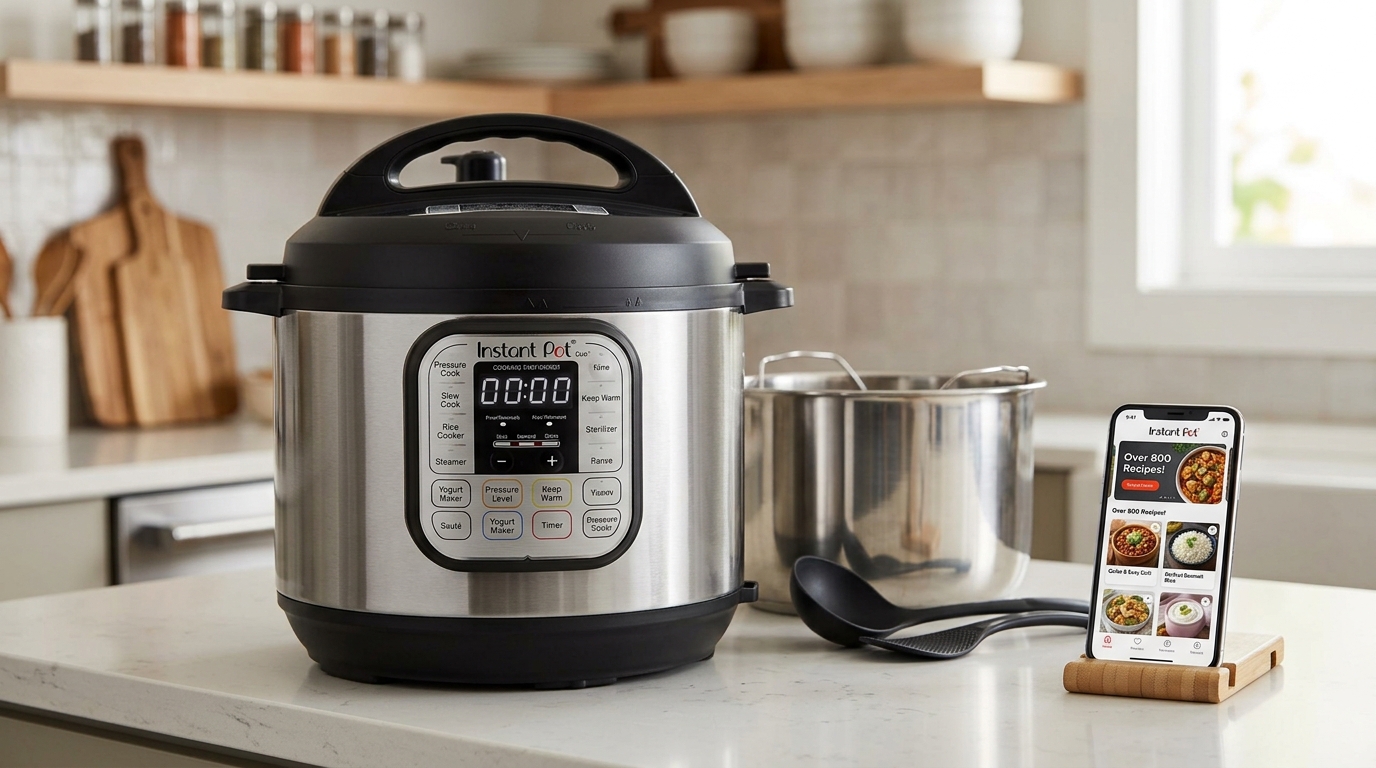
The jump from the standard Duo to the Duo Plus really comes down to two things: a sterilizing function and a much bigger recipe library through the companion app. Everything else that made the original Duo popular is still here — nine functions total, packed into one 6-quart pot, covering pressure cooking, slow cooking, rice making, and a few less common extras like yogurt culturing. This piece walks through what the Duo Plus actually offers, how each function tends to show up in real, everyday cooking, who’s probably going to get genuine value out of it, and a handful of practical things worth knowing before it becomes a fixture on your counter.
As always with these breakdowns, this isn’t about crowning it the single best multicooker out there — it’s about giving you a clear enough picture of what it does so you can decide for yourself whether it fits how you actually cook.
Key Features
Nine functions in one appliance. Pressure cooking, slow cooking, rice making, steaming, sautéing, yogurt making, warming, and sterilizing — nine distinct modes, which is a genuinely broad spread for a single kitchen tool.
6-quart capacity. A solid middle-ground size, generally enough for a small to medium household without feeling oversized on a counter.
Pressure cooking as the backbone. This is still the defining feature across the whole Instant Pot line — sealed, pressurized steam that cooks food dramatically faster than a regular stovetop pot, which matters most for dishes like dried beans, tough cuts of meat, or homemade stock that would otherwise eat up hours.
A real slow cook mode. Flip it around and you get an actual slow cooker experience, suited to stews or braises that genuinely benefit from a long, gentle simmer instead of speed.
Built-in rice maker. A dedicated setting handles rice and grains comparably to a standalone rice cooker, letting you skip owning a separate single-purpose appliance if you’d rather not.
Steaming with a trivet insert. Steams vegetables, seafood, and similar foods using steam generated directly inside the sealed pot.
Sauté built right in. Browning meat, onions, or garlic in the pot before switching to pressure or slow cook saves you a separate pan for that first step, streamlining a lot of one-pot recipes.
Yogurt mode. A dedicated setting holds the low, steady temperature yogurt culturing needs — genuinely uncommon outside this category, and useful if homemade dairy is something you want to try.
Warmer and sterilizer functions. A warming mode for holding finished food, plus a sterilizing function generally used for baby bottles or canning jars.
Companion app with 800+ recipes. A genuinely large recipe library, meant to help newer owners actually get comfortable with all nine functions instead of sticking to the same two or three recipes forever.
Stainless steel pot. Durable, and free of the coatings found in some nonstick alternatives.
How It Can Be Used
Pressure cooking tends to be the function most owners lean on the most, mainly because it slashes cook time on dishes that would normally take hours — dried beans without an overnight soak, a genuinely tender pot roast, a stew finished in a fraction of the usual stovetop time.
Slow cooking serves an entirely different purpose, chosen when a longer, gentler process actually improves the result — pulled pork, chili, a soup meant to simmer for hours while you’re off handling something else.
The rice function often ends up replacing a dedicated rice cooker outright, particularly appealing to anyone who’d rather not keep a separate rice-only appliance taking up permanent space.
Sautéing usually comes into play right at the start of a recipe — browning onions, garlic, or meat directly in the pot before switching to pressure or slow cook, cutting a whole separate pan out of the process.
Steaming generally needs a trivet insert, letting vegetables, dumplings, or seafood cook using steam built up inside the sealed pot, either on its own or as one stage within a larger meal.
The yogurt function attracts a fairly specific crowd — people genuinely interested in making their own yogurt at home, relying on the pot to hold a precise, low temperature over an extended stretch of time.
The warmer setting gets used constantly, mostly bridging the gap between when a dish finishes and when it’s actually mealtime, while the sterilizer function shows up more occasionally — for parents sanitizing bottles, or home canners prepping jars before a session.
The app tends to see the most use from newer owners, offering guided recipes tailored specifically to each of the nine functions, which cuts a lot of the guesswork out of trying yogurt making or sterilizing for the first time.
Who It May Be Suitable For
Anyone hoping to consolidate several kitchen appliances into one. With nine built-in functions, the Duo Plus particularly suits households looking to clear out a separate rice cooker, slow cooker, steamer, and yogurt maker all at once.
People who genuinely want faster cooking. If dried beans, tough cuts of meat, or homemade stock have always felt like they eat up your whole day, pressure cooking changes that math considerably.
Home cooks curious about trying new projects. Between yogurt making and sterilizing, this model opens the door to a few kitchen tasks that go beyond typical stovetop cooking.
Those who prefer guided, recipe-based cooking. The app’s large recipe library particularly suits newer multicooker users who’d rather follow structured instructions than experiment blind.
Small to medium households. The 6-quart size generally handles a couple or a small family comfortably, with some room for batch cooking or leftovers.
If you’re cooking for a much bigger crowd regularly, or you really just want one specific function without needing the other eight, a bigger-capacity multicooker or a simpler single-purpose appliance might actually serve you better.
Important Things to Consider
Nine functions means a genuine learning curve. Understanding pressure cooking safety, timing, and how each mode differs from the next generally takes some initial trial and error, especially if you’ve never used an electric pressure cooker before.
Pressure cooking safety is worth taking seriously. Proper sealing, venting, and pressure release procedures matter, and it’s genuinely worth reading through the included instructions closely rather than winging it early on.
It still needs dedicated counter or storage space. A 6-quart multicooker is a reasonably sized appliance on its own, and any extra accessories like a steaming trivet need somewhere to live too.
No single function fully replaces a dedicated appliance. Each mode is genuinely useful, but a standalone rice cooker, slow cooker, or yogurt maker built solely around one task will generally outperform the equivalent function here.
The app requires a smartphone to access fully. You can absolutely use the Duo Plus without it, but you’ll miss out on the bulk of that 800+ recipe library without setting it up.
The sealing ring holds onto smells. This is a pretty universal Instant Pot complaint — the rubber sealing ring can retain odors from strongly flavored dishes, usually solved with regular cleaning or having a spare ring around for different types of cooking.
Comparison of General Categories
Multi-function electric pressure cookers — the Duo Plus’s category — generally aim to fold several individual kitchen appliances into one unit, trading a bit of specialized performance for a lot more overall versatility.
Dedicated stovetop pressure cookers skip the multicooker extras entirely, offering pressure cooking alone, generally requiring more hands-on monitoring but sometimes reaching pressure faster than an electric model.
Standalone slow cookers handle long, low-temperature cooking with more capacity than the Duo Plus’s slow cook mode, since that’s their sole job.
Standalone rice cookers are built specifically around rice and grains, often with more specialized settings than the more general rice function found here.
Standalone yogurt makers offer more precise, consistent temperature control tailored solely to yogurt culturing, compared to a secondary function bundled into a multicooker.
Which category actually fits best comes down to how many separate kitchen tasks you’d genuinely want consolidated into one device, how much specialized performance any single function needs to hit, and how much value you place on saving both counter space and the cost of buying several individual appliances.
Frequently Asked Questions
What’s actually included in the “9-in-1” here? Pressure cooking, slow cooking, rice making, steaming, sautéing, yogurt making, warming, and sterilizing.
Is pressure cooking safe for someone who’s never done it before? Generally, yes — as long as you follow the manufacturer’s instructions closely. Electric pressure cookers like this one build in safety mechanisms, but understanding proper use is still an important first step.
Do I need the app to use this multicooker? No, the built-in controls work fine on their own. The app just adds access to a much bigger recipe library, which is especially helpful for newer users.
Can it replace a dedicated rice cooker? For most households, yes — the rice function works as a practical substitute, though anyone wanting more specialized rice settings might still prefer a standalone unit.
What’s the sterilizer function actually for? Generally used to sanitize items like baby bottles or canning jars using heat — a nice extra beyond the appliance’s main cooking functions.
Is the sealing ring hard to maintain? It’s a rubber component that can pick up odors from strongly flavored foods over time, so regular cleaning or keeping a spare ring for different cooking types is a common and easy fix.
Is the 6-quart size enough for a larger family? It generally suits small to medium households well, though bigger families or those needing larger batches regularly might want to look at a bigger-capacity model instead.
Conclusion
The Instant Pot Duo Plus 9-in-1 rounds out the standard Duo lineup with sterilizing added to the mix, backed by a companion app and a genuinely large recipe library, all packed into a single 6-quart stainless steel pot. Its nine functions are aimed squarely at consolidating a handful of separate kitchen appliances into one, while cutting down cook time on a lot of traditionally slow dishes.
Whether it’s the right pick for your kitchen really comes down to how many of those nine functions you’d actually use on a regular basis, how much counter space you can spare, and how much you value guided, app-based recipes over figuring things out on your own. For anyone wanting to trim down the number of appliances in their kitchen while picking up faster cooking along the way, the Duo Plus covers a lot of ground.